
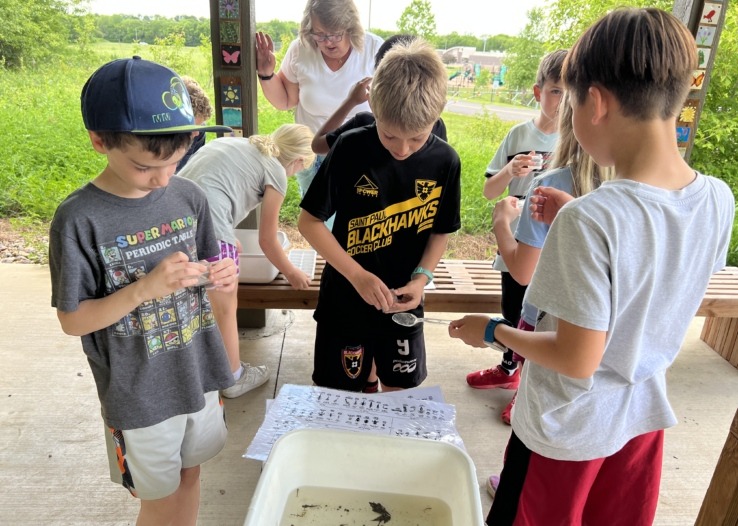
Have you ever heard of the word muck? Are you curious about what things live in the rivers, lakes, and streams around you? Our Let’s Go Mucking program answers those questions!
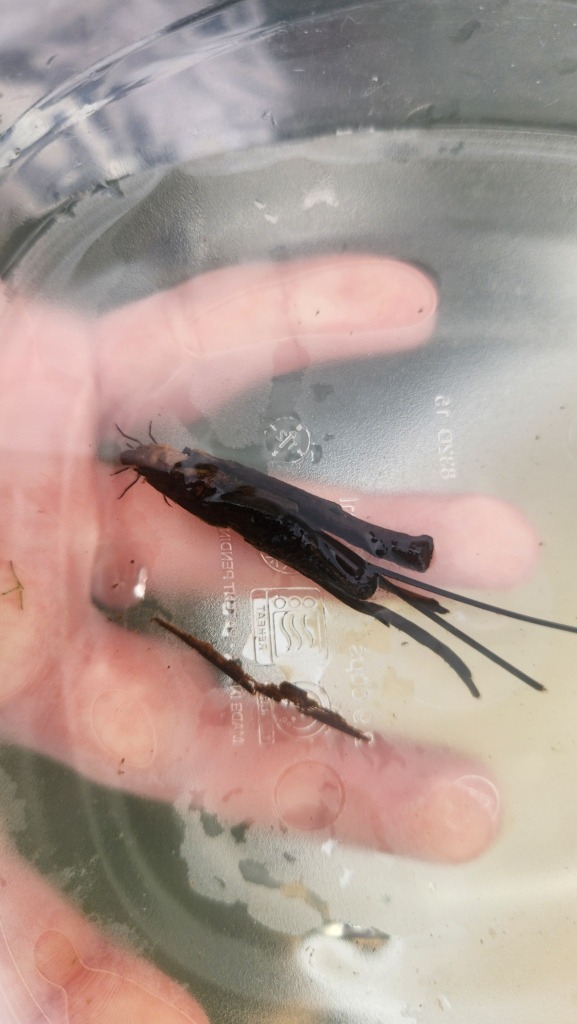
If you’ve ever stepped foot in the water and your foot sinks in, that’s muck! Muck is oxygen-depleted organic matter, clay, and soil that settles on the bottom of a body of water. It creates wonderful habitats for aquatic macroinvertebrates; little critters that you can see with your eyes, with a spine, that live in the water. Using any kind of aquatic net, you can catch these little critters to identify them. But why bother?
Water Quality Indicators
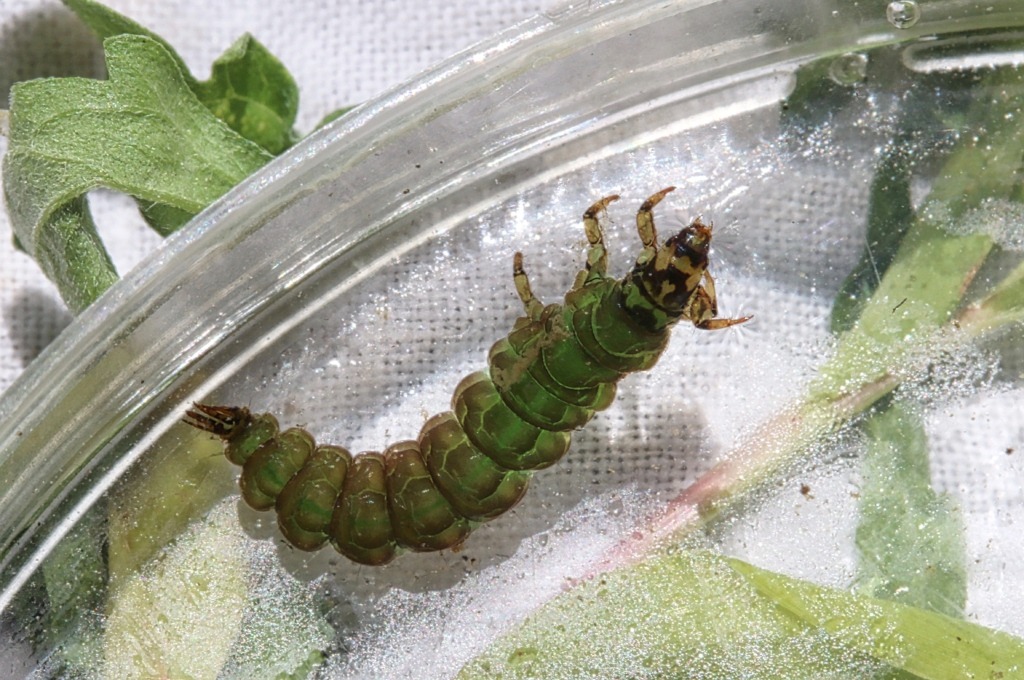
Group 2, critters that are semi-sensitive to pollutants, may be more familiar. Freshwater mussels, caddisfly larvae, dragonfly larvae, crawfish, mayfly larvae, and damselfly larvae are quite abundant throughout the entire St. Croix and Namekagon Rivers.
Critters like orb snails and scuds are semi-tolerant of pollutants in group 3 and are also quite common in the Riverway. Pouch snails, leeches, and tubiflex worms aren’t picky about where they live. They are tolerant of pollutants in group 4.
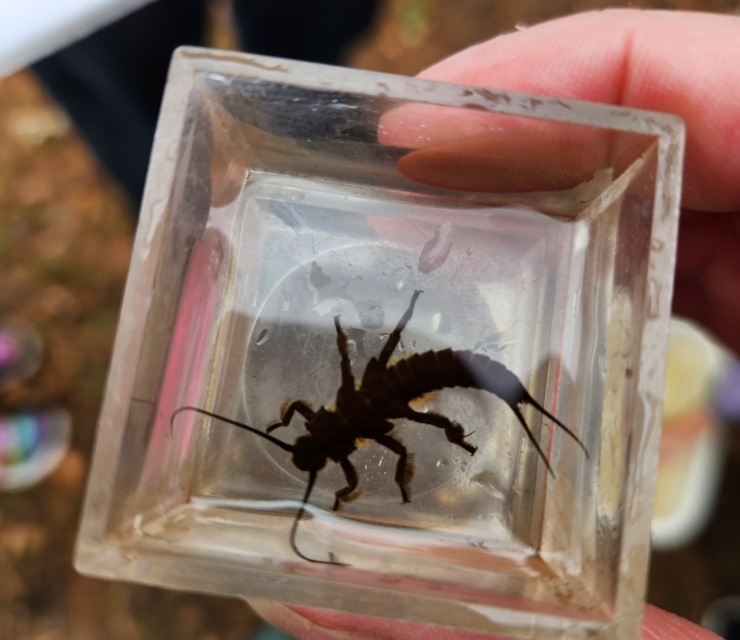
Some macroinvertebrates are considered biotic indicators (or bioindicators). Their presence (or absence) will tell you about the quality of the water you find them in. Typically, they are split into 4 groups depending on their tolerance of pollutants. Critters like stonefly larvae and dobsonfly larvae can only be found in locations where no pollutants are found. Being in group 1, they need high-quality water to survive.
Fish Food
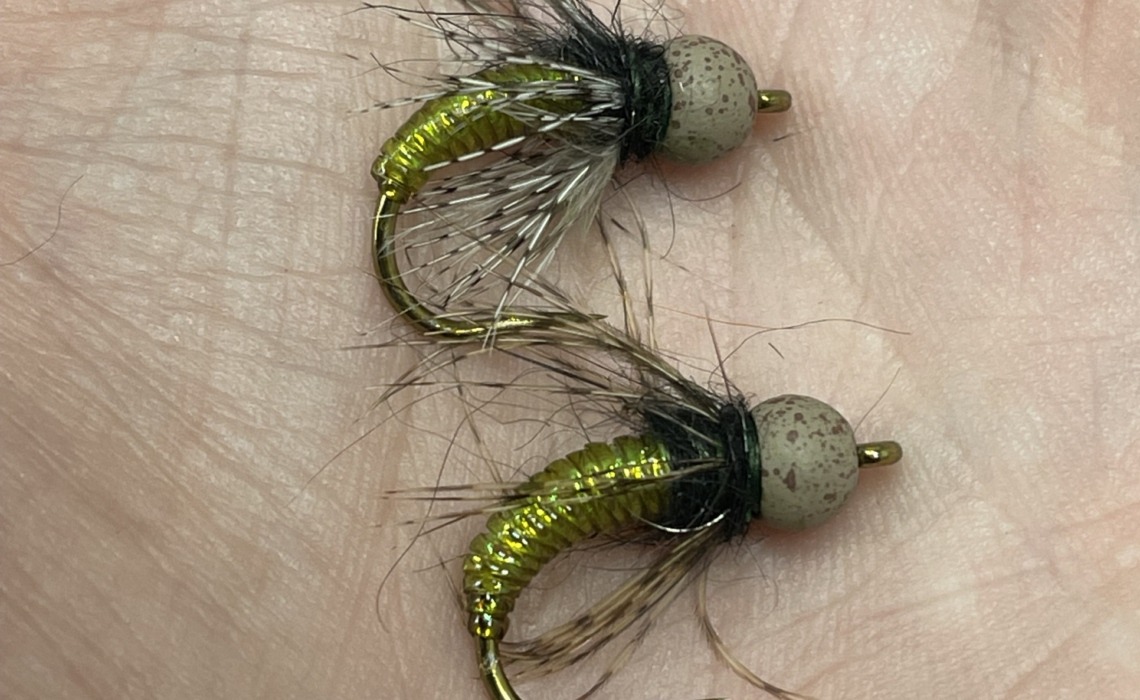
While a lot of scientists are looking for macroinvertebrates for water quality, a lot of fishers are looking at them for clues about what fish are feeding on. Macroinvertebrates are a primary food source for a lot of fish. Different fish eat different food! Mimicking the macroinvertebrates while creating or selecting fly fishing flies allows anglers to really hone in on what they would like to catch. In the St. Croix River, a safe way to catch panfish (crappies, perch, bluegill, etc), is to mimic some of its large prey: dragonfly/dobsonfly/damselfly nymphs, leeches, and even crayfish. Depending on the time of day or year, Brown trout can go for macroinvertebrates like mayflies, caddisflies, or snails and other animals, like minnows, frogs, and even mice!
Anglers can go a step further to match the life cycle of the macroinvertebrates by using a fly pattern that sinks for the nymph version, while a floating pattern can match the adult life cycle well.
Take a Look
Next time you’re at a natural body of water, swish around in the muck and “weeds” and see what critters show up, no special equipment required! You can find excellent Dichotomous Keys online that can help you identify what critter you’re looking at and what that means for the quality of the water.
If you want to ID macroinvertebrates at home, take a look at the Water Action Volunteers (WAV) program from the UW-Madison Extension or macroinvertebrates.org.

About the author
Katrina has years of experience connecting children to positive environmental learning opportunities. Visit our k-12 Education page to get your child or classroom involved.
Read More

k-12 Education
Bring the St Croix and Namekagon Rivers to your local library through Rivers Are Alive
June 1, 2026
Get More Stories
Join Our Email Newsletter